


Ingatestone Hall


Tudor re-enactments for Schools at Ingatestone Hall

The year is 1565

one year after the birth of Shakespeare, seven years after the surrender of Calais to the French and 26 years after the dissolution of the monasteries.  The population of England and Wales is approximately 3 million and average life expectancy is 38 years. 
Queen Elizabeth has been on the throne for seven years and conformity to the Protestant religion is required - Catholic priests are in danger of arrest and imprisonment but lay Catholics continue to be treated with some leniency. 
Young people of different social degree are arriving at Ingatestone Hall to join the household of Sir William Petre who has been Secretary of State to Henry VIII, Edward VI and Queen Mary and remains a trusted advisor of the present Queen. 

Every year, during the last three weeks of June, we provide parties of schoolchildren with the opportunity to spend a day playing the part of these young people, thereby gaining a vivid insight into the nature of everyday life in Tudor times and the great issues of the day. 

Reenactment at Ingatestone HallAll the happenings of the day are based on the evidence of contemporary records, many drawn from the archive of the Petre family itself and their household at Ingatestone Hall which remained loyal to the Church of Rome. 

Like all "great houses" in the sixteenth century, Ingatestone Hall was a largely self-sufficient community, comprising some forty persons engaged upon providing all the food and drink, clothing and other basic necessities required.  Your pupils will have an opportunity actually to participate in some of the daily tasks involved and to meet other members of the household such as the steward, the housekeeper, the gardener, the seamstress, the weaver and the the warrener and to discuss a variety of topics with them, not least the matter of a stranger seen abroad in the grounds,the identity of Sir William's mysterious guest and preparations for the forthcoming visit of the great Lord Cecil. 


Reenactment at Ingatestone HallThe day begins at 10.10 a.m.  with the arrival of your party at the gates of Ingatestone Hall where you are met by the Man-at-Arms.  Each of the children then joins one of the six groups to which they have been assigned.  These groups, each of which is led by a member of the household (see below) then separate to go about the business appropriate to their individual roles.  Halfway through the proceedings, lunch is provided for all the children as part of the "performance". 


Reenactment at Ingatestone HallThe day ends with a grand assembly of all concerned in the Upper Chamber for many of the children to show Sir William Petre some of the fruits of their work during the day.  At approximately 2.30 p.m.  the children are given their wages for the day (one groat) and sent on their way. 

Reenactment at Ingatestone Hall


Booking a place for your school

The Re-enactment is primarily designed to support the study of Tudor history at Key Stage 2 and is best suited to those in Years 5 and 6. 
It takes place on Monday, Tuesday, Wednesday and Thursday during the last three weeks of June each year. 

We aim to receive as close to 90 children as possible each day and so, if your party is significantly smaller than this, you will share the day with another school.  Parties of significantly more than 90 will be obliged to split their visit over two or more days. 

The inclusive charge for participation in the Re-enactment (2013) is £6.40 for each person attending (including adults)

Bookings are accepted by post, e-mail or fax at any time on a first come, first served basis.  We acknowledge such bookings but we will not allocate a specific date for your party until early in the Autumn term preceding the year of your visit. 

To reserve a space for your school, e-mail or write to us giving

  1. The name, address and telephone number of your school, together with the name of the contact teacher.
  2. The number of children you expect to bring.
  3. The year in which you wish to attend.
  4. Any particular days between mid-June and the end of the first week in July (Monday - Thursday only) when other commitments (e.g.  sports day etc.) would prevent your school making a visit.

Places in the Re-enactment are much in demand and we are normally fully booked twelve to fifteen months ahead.  In order to avoid the available spaces being monopolised by a small number of schools, we do not hold at any time more than one booking per school. 

About four months in advance, we will send you comprehensive teachers' notes about the day but, meanwhile, please note:

  1. The resident "characters" will interact with the children but will take no responsibility for their personal care or oversight (e.g.  first aid, lavatory visits, general supervision etc.).  You should therefore bring with you a sufficient number of teachers or adult helpers to carry out these tasks.  In particular, we have found it important that each child has an adult who is known to them accompanying the group to which they are attached.  For some the experience can otherwise be too overwhelming.
  2. No specific preparation is required for the day and you will be the best judge of your pupils' need.  They should be made aware of the social and political background of the period, the hierarchical nature of society and their place within it and the "Shakespearean" language they will encounter.  On the other hand, they should NOT be briefed in detail about the events of the day but should be left to discover these for themselves.
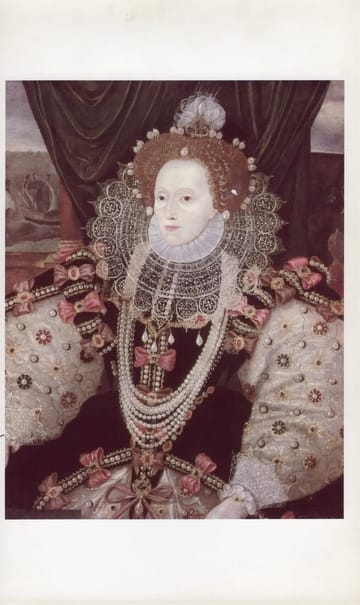
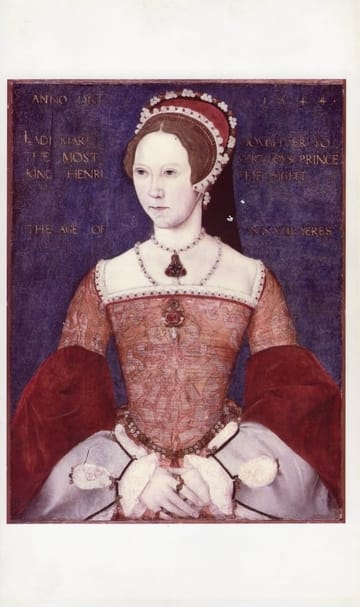
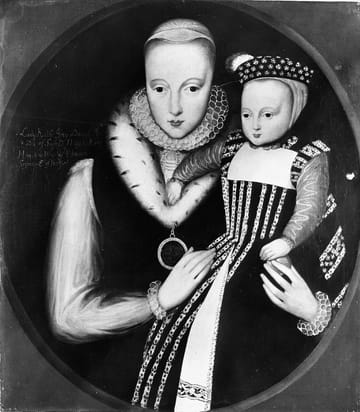
  3. All participants (including adults) are expected to make an attempt at Tudor dress.  Slavish accuracy is not required and we would not wish you to go to great expense.  The illustrations below suggest what you should aim for. 

    Tudor Dress

  4. Avoid bringing modern paraphernalia (cameras, mobile telephones, sports bags etc.).  Sweets and snacks are also discouraged - all the children receive a simple but adequate lunch. 
  5. On the other hand, we are very conscious that some children will have special dietary needs or restrictions and they of course are welcome to bring their own food.  Similarly we do our best to accommodate children with mobility difficulties.  In either case, please consult beforehand to discuss what special measures may be necessary.


Reenactment at Ingatestone Hall

The Groups


Reenactment at Ingatestone Hall
Besides Sir William Petre himself, many of the other individuals appearing in the Re-Enactment are recorded as being members of the household in his day
Lady Anne, his wife
Sir John Woodward, the chaplain
John Kyme, the steward
Mary Persey, the housekeeper
Mistress Joyce, Lady Anne's 'gentlewoman'. 
Charles Waggestaff, the man-at-arms
Master Currance, the leader of the band of musicians who played at the wedding of Sir William's daughter


The Chaplain
The ChaplinYoung sons and daughters of Catholic nobility and gentry come to the Hall as wards of Sir William to be educated by Sir John Woodward, rector of Ingatestonc but also tutor and chaplain to the family.  They spend the morning sketching and learning the elements of arms drill and courtly manners.  The afternoon is spent in the schoolroom although Sir John will let the children into some of the secrets of the house.  At the end of the day, they will be called on to repeat their lesson before the assembled company. 

Suitable for boys and girls. 


The Steward
The StewardYoungsters from yeoman families come to the Hall to join the staff of John Kyme, the Steward, to learn to be clerks and bailiffs.  They spend the morning working on accounts before visiting Lady Anne to report on estate matters.  The afternoon is devoted to a tour of inspection of the estate. 

More appropriate for boys than girls - girls would not have been eligible to become clerks or bailiffs. 


The Housekeeper
The HousekeeperYoung people from poor families come to the Hall to join the kitchen staff under the supervision of Mistress Mary Persey, the housekeeper.  They prepare lunch for the household and wait on the gentry.  After lunch, Mistress Mary introduces them to the secrets of herbal medicine and plans are made for Secretary Cecil's banquet. 

Suitable for girls and boys.  The group will be preparing the actual food that the rest are going to eat and so dare we suggest that girls may be more suitable, due to their greater awareness of hygiene?


The Lady's Maid
The Ladys MaidYoung people from the families of poorer tenants come to the Hall to join the staff and learn to be personal maids under the supervision of Mistress Joyce.  They assist Lady Anne in her toilette before withdrawing to do some sewing.  After waiting on the Steward's Group at lunch and having their own, they join the Housekeeper's introduction to herbal medicine before visiting the Weaver to fetch new cloth. 

Suitable for girls only - Lady Anne's toilette may involve a measure of deshabille.  The needlework will be very elementary but even that may be too much for the complete beginner. 


The Players
The PlayersYoung people from the neighbourhood come to join the Player's group of travelling minstrels who are temporarily resident at the Hall.  They spend the day rehearsing various aspects of music and dance - an entertainment is presented for the gentry as they lunch and the group performs again for Sir William on his return from London.  Plans for a special masque for Secretary Cecil's banquet are made, involving a visit to the seamstress to discuss costumes.  The nature and content of the entertainment that the group will work on will be adapted to suit the particular talents of your group. 

Suitable for boys and girls, no previous experience is necessary although obviously those with some musical or rhythmic ability would be better. 


The Gardeners
The GardenersYoung people from labourers' families come to the Hall to join the garden staff under the supervision of Richard Gardyner.  They spend the morning gathering herbs suitable for dyeing which they take to the weaver.  After lunch, they visit the warren in the hope of cadging a rabbit for dinner.  The Steward sends them back to work but Richard Gardyner has other ideas. 

More suitable, for the sake of verisimilitude, for boys.


  PRINT ARTICLE